by Margy Eckelkamp, The Scoop magazine
 |
|---|
| Stephen Vaden |
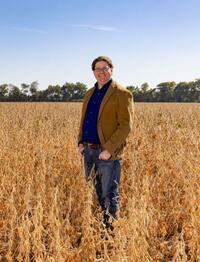
Washington, DC — USDA Deputy Secretary Stephen Vaden outlined a list of priority topics for the agency in 2026 during a recent webinar hosted by the National Ag Law Center. Vaden leads the department’s operations and implements policies that support America’s food and farm systems.
Included in his remarks:
Antitrust and Competition. Vaden says antitrust laws exist for a reason: when an industry gets too concentrated, certain actions undermine free enterprise.
“There are signs that that may be happening in American agriculture. That’s why President Trump has signed at least two executive orders asking USDA to work with the Department of Justice and the Federal Trade Commission to investigate these antitrust concerns,” he says.
He shares three examples — two in farm equipment and one in crop inputs.
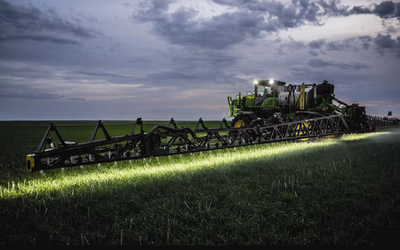
“This administration thinks farmers should be able to repair their own equipment, and the industry’s efforts to prevent them from doing so are illegal,” he says. “That’s why this administration’s Federal Trade Commission is currently suing John Deere and some of the fellow equipment manufacturers to stand up for American farmers’ rights to repair their own equipment and to not to have to suffer under a system where, when their equipment breaks down in the field, they have to call a John Deere dealer, for example, and wait for them to send out someone to fix a simple issue that the farmer can repair him or herself — costing them time, productivity and money.”
He also says the administration is looking into how manufacturers distribute and sell their equipment. Specifically, the geography assignment and trade territories of dealers are being questioned in light of any price differences.
“If you should happen to pick any other dealer than the one they designate as your local dealer, they’ll charge you more for the same piece of equipment — the exact same piece equipment. There’s a financial penalty, which is prohibitive to you exercising choice over which dealer you use to buy your equipment — eliminating the ability to compete on the basis of price,” Vaden says.
He adds the exclusive use of OEM parts at the dealership adds costs to farmers.
Fertilizer. Vaden directed his farm input comments to the fertilizer sector.
“The duopoly that is Mosaic and Nutrien and their successful efforts over the past several years to constrain fertilizer supply in this country and drive up the costs that farmers are paying,” he says. “This administration is going to do everything it can to ensure that farmers have the fertilizer they need, at a price that they can pay, and a price it allows food to be purchased at the price the consumer can pay.”
He says a new company, BHP, will enter the mining sector for potash in Saskatchewan, Canada, with a $13 billion investment in a mine that should be operational by mid-2027, with exports coming into the U.S.
“We’re not going allow these two companies to do anything to undermine this or any other new market participant that wants to come in, provide new fertilizer supply and break up the cute little game that Mosaic and Nutrien have been playing for the last several years,” Vaden says.
Foreign Land Ownership. USDA recently unveiled a new online portal to report foreign-owned agricultural land transactions. Vaden previewed this new tool as a modernized way to help USDA enforce regulations that have been on the books since 1978.
“AFITA, the Agriculture Foreign Investment Disclosure Act, has required any time a foreign person comes in possession of farmland here in the United States, they are required to register with USDA. Now in all honesty, over the past nearly 50 years, that statute has probably been ignored more often than it has been followed,” Vaden says.
Biofuels Policy. “We need a proper biofuels policy to open up domestic demand. The Secretary has endorsed E-15,” Vaden says. “We need Congress to pass that. That’s going to instantly result in at least 50% more corn usage for ethanol, meaning millions of more bushels will need to be purchased from American farmers to meet that increased biofuel demand.”
Vaden credits EPA Administrator Lee Zeldin and his team for their RVO rule, which sets ‘aggressive’ targets.
Pesticide Regulation. Late last week, it was announced the Supreme Court would take up the Durnell case, which is related to Roundup litigation.
“I’m glad the Supreme Court saw that. I’m glad that they took the Solicitor General’s suggestion that they hear this case. And I hope they’ll listen very carefully to what Solicitor General Sauer and his team have to say as this case is briefed and argued. Because this really could make the difference in between whether America is able to retain its status as the innovation leader in agriculture or whether we potentially have a threat to lose that crown because we’re going to let juries second guess PhD experts who’ve spent decades at this work,” Vaden says.
In favor of federal preemption, Vaden goes on to detail the years of paperwork, approval and regulatory steps EPA regulates every commercially available chemical under.
USDA Reorganization. Vaden says the agency is being transparent, thoughtful and strategic in its announced reorganization.
“We have a footprint in D.C. that calling it ‘underused’ is diplomatic. The south building can seat 7,500 employees. On its busiest day — we require everyone to come into the office — that building hasn’t reached 40% occupancy,” he says. “As a business manager or managing tax payer money, it makes no sense to keep up facilities that are largely empty.”
Vaden says it’s time to make the department footprint match its needs. Regular updates are being posted to USDA.gov/reorg, but the under secretary says implementation is going on right now with forthcoming announcements on locations for its new hub model.
To read the entire article click here.